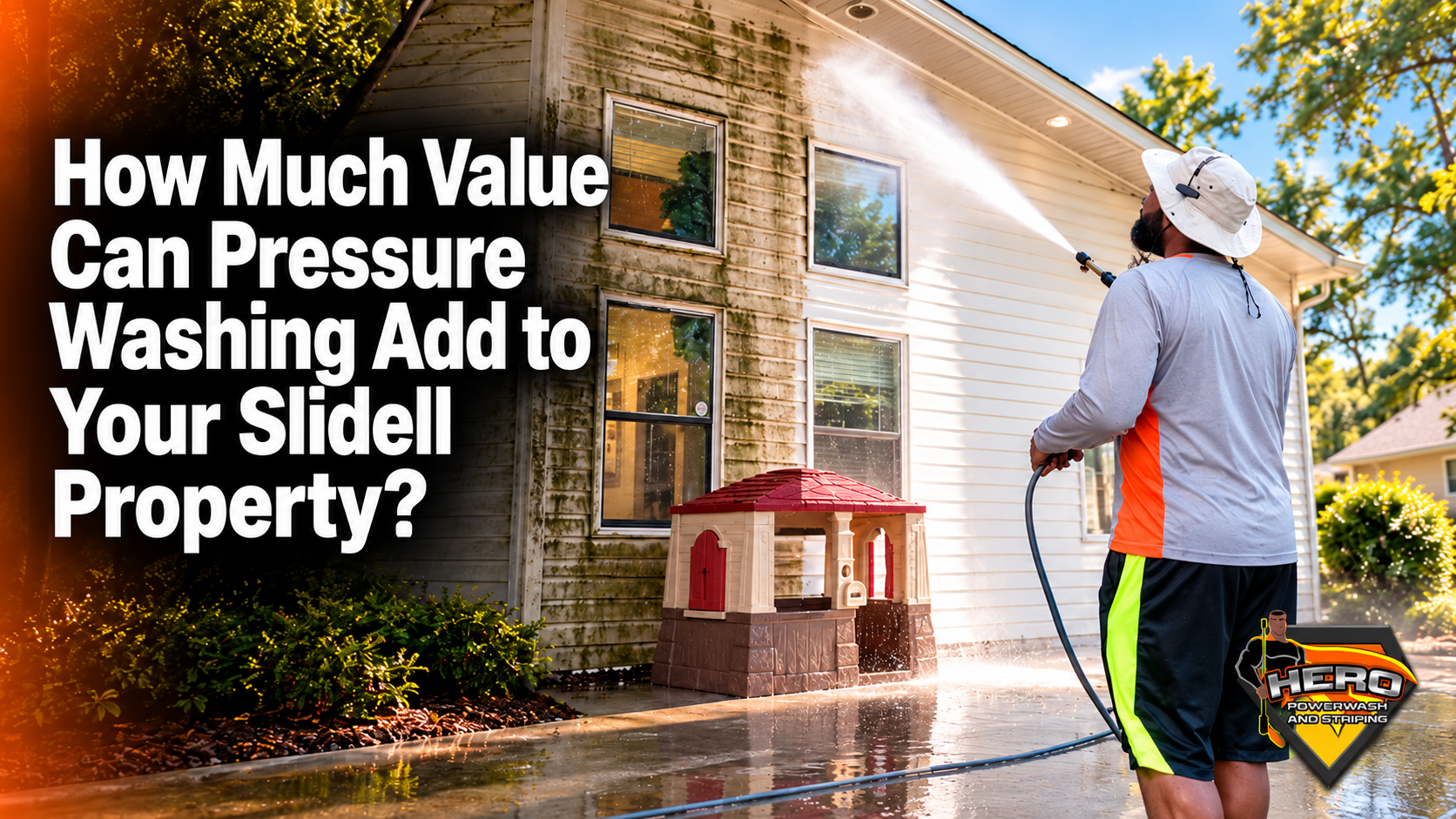
You step outside one morning and notice it: a faint green tint creeping up the north side of your siding, dark streaking under the soffits, and a dull, dingy look to the exterior that wasn’t there a year ago. It rained last week, so why does the house look worse?
This is what Slidell homeowners deal with year-round. Living on the Northshore, just miles from Lake Pontchartrain, means your home sits in one of the most mold- and algae-friendly climates in the country. With 62 inches of rainfall per year, relative humidity that never drops below 73%, and warm winters that never give organic growth a reason to die back, your siding is in a constant battle it cannot win on its own.
The direct answer: most homes in Slidell should be soft washed every 12 months. Homes near the lake, surrounded by heavy tree canopy, or with canal-front exposure often need service every 6 to 9 months. Here’s how to figure out exactly where your home falls, and why it matters more here than most places.
Table of Contents
The Short Answer: How Often Should You Soft Wash in Slidell?
Not all Slidell homes are equal when it comes to how fast grime, mold, and algae take hold. Your property’s location, shade exposure, and proximity to water all shift the timeline. Use this as your starting point:
Home Situation | Recommended Frequency |
Average Slidell home with decent sun exposure | Every 12 months |
Shaded home or heavy tree canopy | Every 9 to 12 months |
Waterfront or canal-front (Eden Isles, Oak Harbor) | Every 6 to 9 months |
North-facing walls, which stay damp the longest | Every 6 to 12 months |
Home with a known mold or algae history | Every 9 months |
After a hurricane or tropical storm | Within 30 to 60 days post-storm |
If you’re unsure which category fits your home, the general rule is simple: the more shade and moisture exposure your property has, the sooner you’ll see growth return. Annual service covers most Slidell homes. If you’re noticing streaks or patches before the year is up, move to a shorter interval.
Why Slidell Homes Get Dirty Faster Than Most
There’s a reason you can’t skip a year the way homeowners in drier climates sometimes do. Slidell’s conditions stack against you in ways that are worth understanding.
The proximity to Lake Pontchartrain is the factor most people overlook. The lake generates brackish, moisture-laden air that drifts across the Northshore consistently, not just after rain, but every day. That lake air isn’t pure freshwater humidity. The brackish quality of the moisture accelerates algae and mildew growth on siding faster than you’d see in inland Louisiana cities like Baton Rouge or Lafayette. Homes in Eden Isles and Oak Harbor, with direct canal frontage, feel this effect most intensely.
Then there are the numbers. Slidell receives approximately 62 inches of rainfall per year, nearly 25 inches more than the national average. Combined with humidity levels that sit between 73% and 79% year-round, surfaces around your home rarely get a true drying window. The EPA notes that sustained humidity above roughly 60% creates ideal conditions for mold and mildew to establish and spread. In Slidell, that threshold is cleared every single month of the year.
Warm winters compound the problem. In colder climates, a hard freeze kills off algae and mold spores between seasons and gives homeowners a natural reset. Slidell doesn’t get that. Growth that takes hold in summer keeps creeping through December. By the time spring arrives, what started as a faint haze has had months to entrench itself on the surface.
Finally, many of Slidell’s most desirable neighborhoods, especially those with mature live oak canopy in Olde Towne and surrounding areas, keep siding shaded for the majority of the day. Shade means moisture stays on surfaces longer after rainfall, which means faster growth, especially on north-facing walls that barely see direct sun at all.
What Happens If You Wait Too Long?
Skipping a year might seem harmless. The consequences that follow are rarely harmless.
Paint begins to fail. Mold and algae don’t just sit on top of paint. They accelerate its breakdown from below. Peeling and bubbling appear sooner than the manufacturer’s timeline suggests, and repainting a home exterior costs significantly more than an annual soft wash.
Stains become permanent. Dark staining on stucco, brick, and vinyl that has been sitting for more than a season becomes increasingly difficult to remove. After two or more years of neglect, some surfaces require replacement rather than cleaning because the stain has penetrated too deeply to lift.
Wood rots quietly. Soffits, fascia, and wood trim are particularly vulnerable. Sustained moisture from algae and mold buildup works into the wood over time, causing deterioration beneath the surface. By the time it’s visible, the damage is structural.
Cleaning costs more. A heavily soiled home requires more time on site, stronger solution concentrations, and occasionally multiple passes. The cost of an emergency clean after years of neglect consistently exceeds what a regular annual schedule would have cost over the same period.
HOA fines accumulate. In Slidell’s managed communities, exterior maintenance isn’t optional. Ongoing violations can result in formal fines and escalating notices that add stress and cost on top of the cleaning bill itself.
Annual soft washing is preventative maintenance, not just cosmetic upkeep. It protects the materials your home is built from. The professional house washing team at Hero Powerwash & Striping serves Slidell and the surrounding Northshore. Reach out for a free quote before the buildup gets ahead of you.
The Best Time of Year to Soft Wash Your House in Slidell
Unlike homeowners in northern states who have to work around freezing temperatures, Slidell residents can schedule soft washing any month of the year. But timing still matters for how long the results last.
Spring (March through May) is the top recommendation. A spring clean removes the pollen load, winter debris, and any growth that built up through the mild Louisiana winter. More importantly, it gets your home clean before entering the hottest, most humid stretch of the year, the months when algae and mold grow fastest. Starting summer with a clean exterior means growth has to start from zero rather than picking up where fall left off.
Fall (October through November) is the second-best window. It follows hurricane season, clearing any storm residue and summer buildup before the holiday season. It also sets the home up well for any fall listings, appraisals, or outdoor events.
Year-round availability means you’re never locked out of a scheduling window, but spring and fall cleanings consistently hold the longest in Slidell’s seasonal rhythm.
After a Hurricane or Tropical Storm: When Should You Soft Wash?
This is something most exterior cleaning blogs never address, but Slidell homeowners know the drill.
Tropical storms and hurricanes leave behind more than visible debris. Days of sustained rain, wind-driven organic material, and storm surge residue create ideal conditions for an accelerated mold and algae outbreak. Surfaces that were clean before the storm can show visible growth within three to four weeks of a major weather event, faster than a normal growth cycle because the storm has seeded every surface with material that feeds it.
Slidell’s position on the Northshore puts it directly in the path of Gulf systems. The region has experienced significant storm surge and sustained wind exposure from major storms, and many longtime Northshore homeowners treat post-storm exterior cleaning as a standard part of recovery, not an optional add-on.
Once your home has been assessed for structural damage and cleared for exterior work, schedule a soft wash within 30 to 60 days of the storm. Waiting longer allows growth to establish roots in surface pores, making the job harder and the cost higher. Watch specifically for dark streaks appearing unusually fast after the event, debris lodged in soffits or against siding, and waterline residue on lower sections of siding common after surge events.
Frequently Asked Questions
How long does soft washing keep a house clean in Louisiana?
In Slidell’s climate, a professional soft wash typically keeps a home clean for 12 to 18 months, depending on sun exposure, tree canopy, and proximity to Lake Pontchartrain. Heavily shaded properties or homes near the water may see growth begin returning within 9 to 12 months.
Is soft washing safe for all siding types?
Yes. Soft washing uses low pressure comparable to a garden hose and is safe for vinyl, brick, stucco, Hardie board, and painted wood. Most siding manufacturers specifically recommend low-pressure cleaning over high-pressure methods, which can damage surfaces and void warranties.
Can I soft wash my house myself?
DIY soft washing is possible, but it requires the correct equipment, proper chemical dilution ratios, and precautions to protect surrounding landscaping. Incorrect solution concentrations can damage siding or kill plants. Professional service consistently produces longer-lasting results and eliminates the risk of surface damage from improper application.
How do I know if my house needs soft washing or just a rinse?
If you see green or black streaks, dark patches on soffits, or a generally dull appearance that persists after rainfall, a soft wash is needed. A rinse with a garden hose dilutes surface-level buildup temporarily but does not kill the organic growth beneath. It returns within days. Soft washing eliminates the growth at the source.
Ready to Schedule Your Soft Wash in Slidell?
Slidell’s climate doesn’t give your home’s exterior a break, and an annual soft wash is one of the most straightforward ways to stay ahead of the damage it causes. Whether you’re on a regular maintenance schedule, catching up after a storm, or responding to an HOA notice, Hero Powerwash & Striping knows the Northshore and what Slidell homes deal with year-round.